Blank doc. Cursor blinking. Dread.
Her org sent the all-hands AI memo. Everyone's supposed to "use AI more." She's tried ChatGPT for emails. That's it. The slide deck calls it AI fluency. She has no idea what she's supposed to do with it.
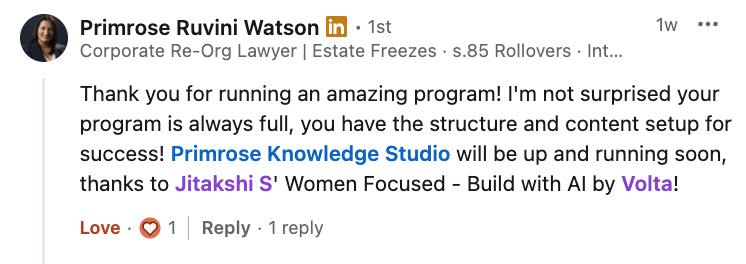
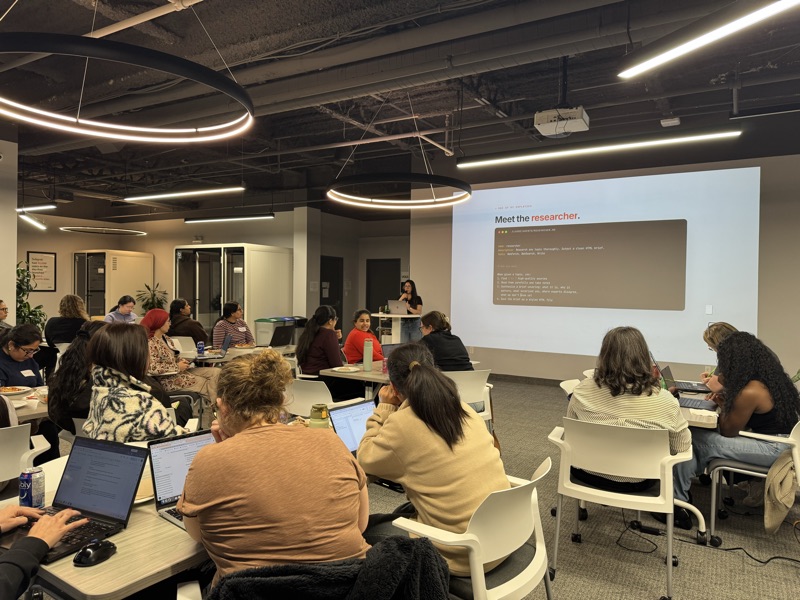
I run hands-on AI cohorts for the women on your team – where they build and ship real working tools by the end of the session. Priced by how many people you bring. Mixed teams welcome too.

Whether it's your whole women's network or a few women in one department, this is the room where they stop sitting through AI talks and start building real tools. Works for any role, technical or not – and we run mixed whole-team cohorts too.
Tell me how many people you want in the room. Pricing follows the headcount – and the bigger the group, the lighter the touch; the smaller the group, the deeper the build.
Best for: introducing AI to a whole department or team offsite – everyone builds their first thing.
Best for: upskilling a core team so they stop waiting on the dev queue and start building for themselves.
Best for: building real internal tools and lasting in-house AI capability that outlives the engagement.
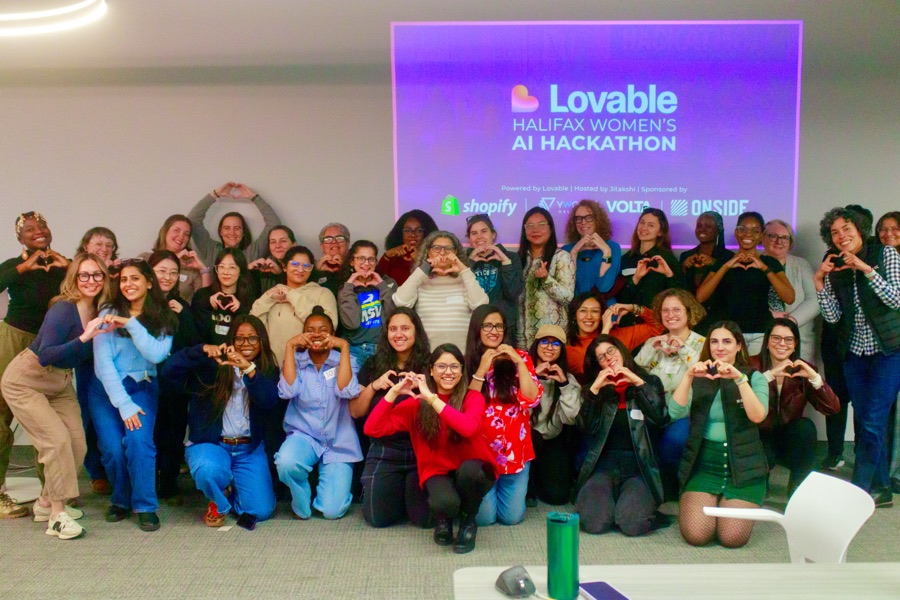
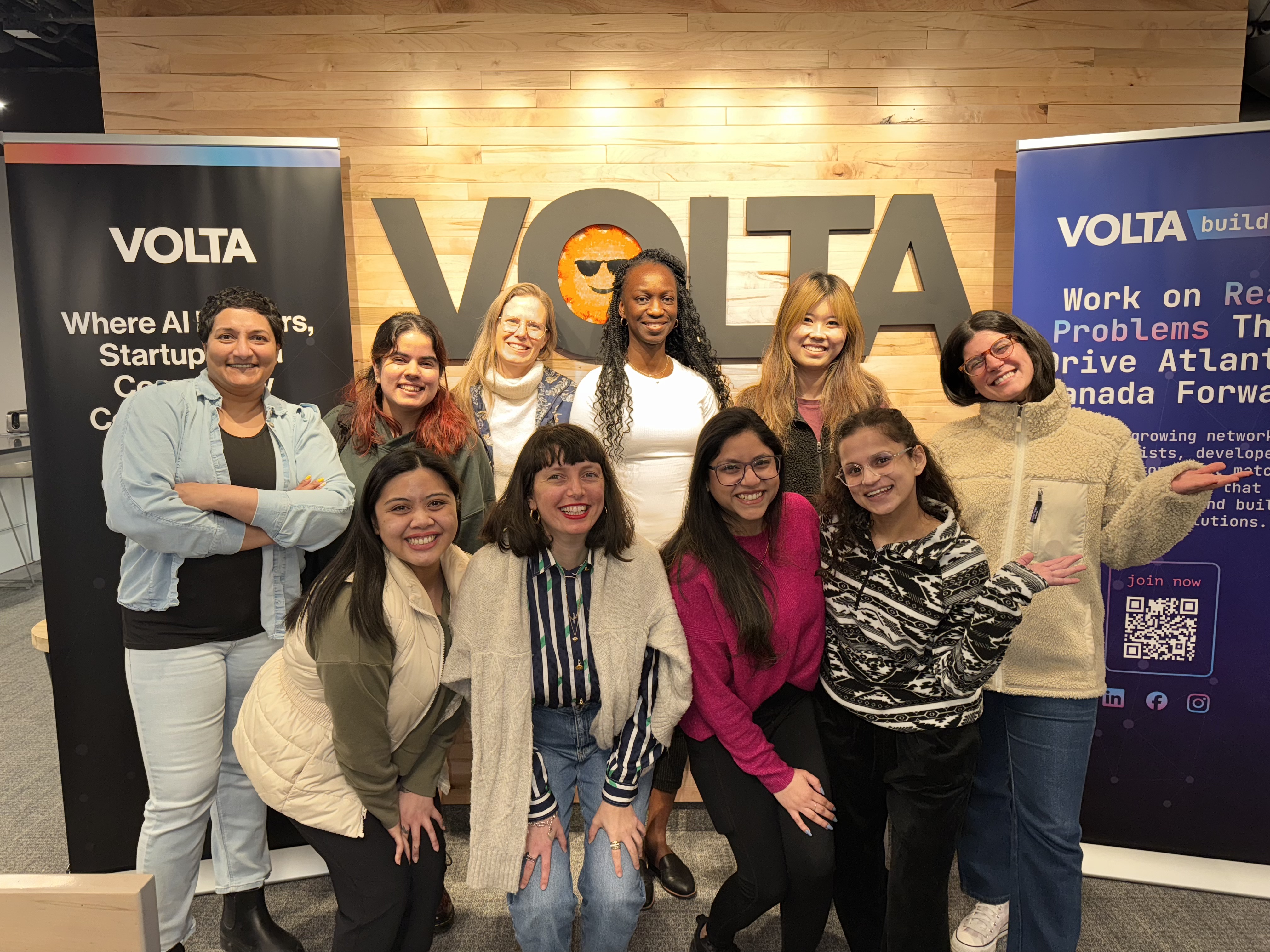
In my last women's sprint: 10 women, zero coding background, 100% shipped a working app.


Real tools your team will actually build. Pick a department.
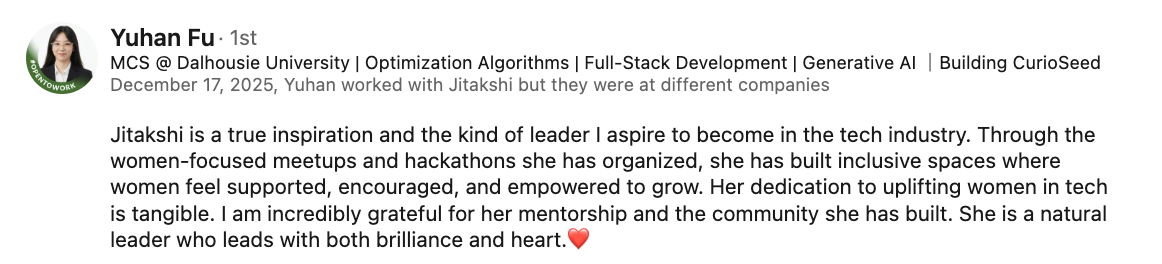
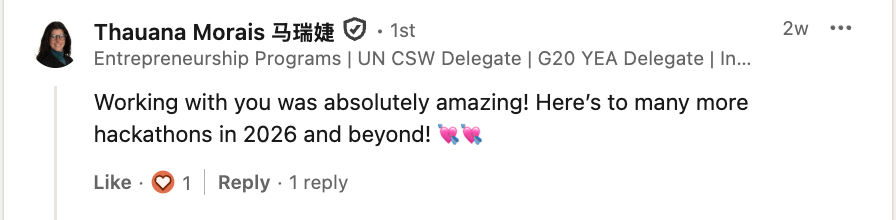
When the room is all-women, the women build. They ask questions out loud. They demo without apologizing. They pitch the messy ideas. I've run mixed rooms and women-only rooms – the difference isn't subtle. It's the entire reason I started doing this work.
If your company is serious about women in AI, the path isn't another panel. It's a private cohort where they ship something real.
Monday, she's anxious about AI. Friday, she's demoing a tool she built – that her team uses on Monday. This is what one of my sessions feels like, scene by scene.
Her org sent the all-hands AI memo. Everyone's supposed to "use AI more." She's tried ChatGPT for emails. That's it. The slide deck calls it AI fluency. She has no idea what she's supposed to do with it.
In the first hour, every participant picks a real problem from their job. Then they describe it – in plain English – to Lovable. A working web app appears. No tutorial. No syntax. Just the thing they wanted.
Day two is Claude Code. Sounds intimidating – but she's just having a conversation. She asks it to add email notifications. It writes the code, explains what it did, and asks if she wants it to deploy.
The session ends with demos – because saying it out loud is what makes the skill stick. Maya walks her team through a tool that's already in production. Three colleagues ask if they can join the next cohort. That's how culture changes.
Anthropic Claude Ambassador
– Atlantic Canada
100+ people
shipped real software
in my rooms
Previously:
Google · Meta · Netflix · Audi
I don't run
workshops.
I build cultures
where your team
keeps building
after I leave.
– that's the difference –
30 minutes. We figure out how many people, the right format, and what your team would build. No pitch – just a conversation.